Fraud-Detection
Fraud Detection in Financial Transactions
🚀 Project Overview
This project focuses on building a Fraud Detection Machine Learning System for a financial company. The goal is to detect fraudulent transactions proactively and provide insights for prevention strategies.
Key highlights:
- Binary classification problem (Fraud vs Non-Fraud)
- Dataset: 6,362,620 transactions with 10+ features
- Extreme class imbalance: only 0.13% of transactions are fraudulent
- Evaluation metrics: Precision, Recall, F1-Score, ROC-AUC, PR-AUC
📊 Dataset Description
- step: Unit of time (1 step = 1 hour, total 744 steps = 30 days)
- type: Transaction type (
CASH-IN,CASH-OUT,DEBIT,PAYMENT,TRANSFER) - amount: Transaction amount in local currency
- nameOrig / nameDest: Sender and receiver IDs
- oldbalanceOrg / newbalanceOrig: Sender’s balance before and after transaction
- oldbalanceDest / newbalanceDest: Receiver’s balance before and after transaction
- isFraud: Fraudulent transaction indicator (1 = fraud)
- isFlaggedFraud: Flagged illegal transactions (>200,000 in single transfer)
🔎 Exploratory Data Analysis (EDA)
Class Imbalance
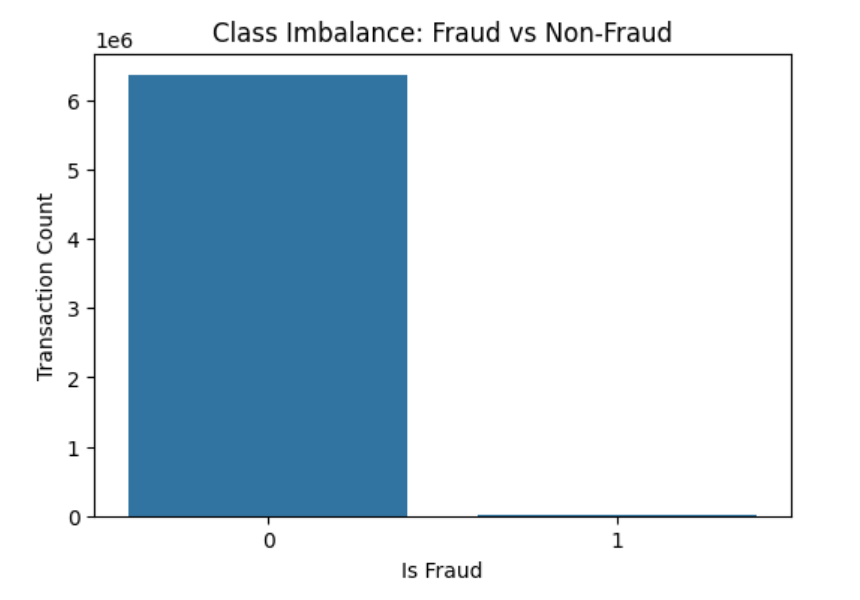
The dataset is highly imbalanced with 0.13% fraudulent transactions, which necessitates special handling during modeling.
Transaction Type Distribution
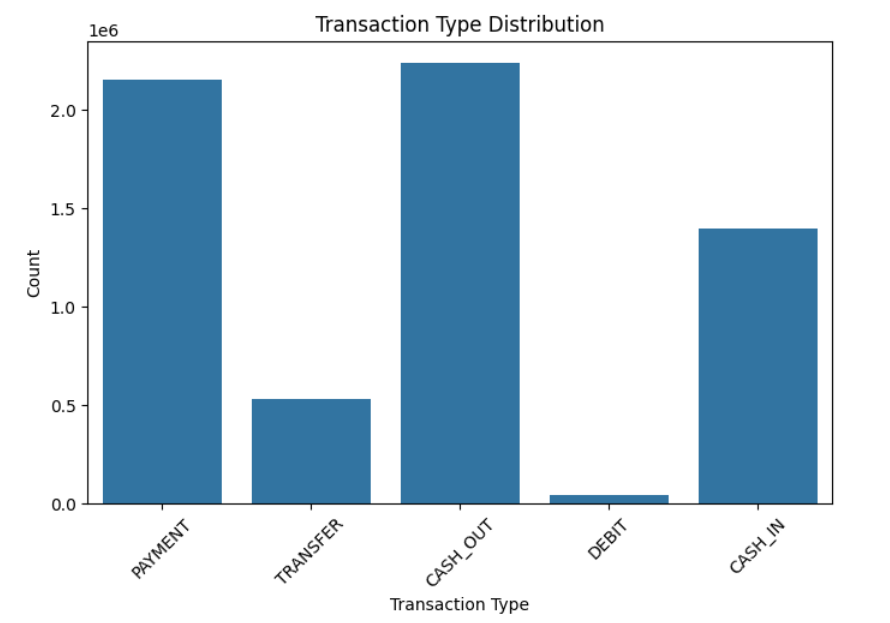
CASH_OUT and TRANSFER transactions are more likely to involve fraud.
Amount Distribution
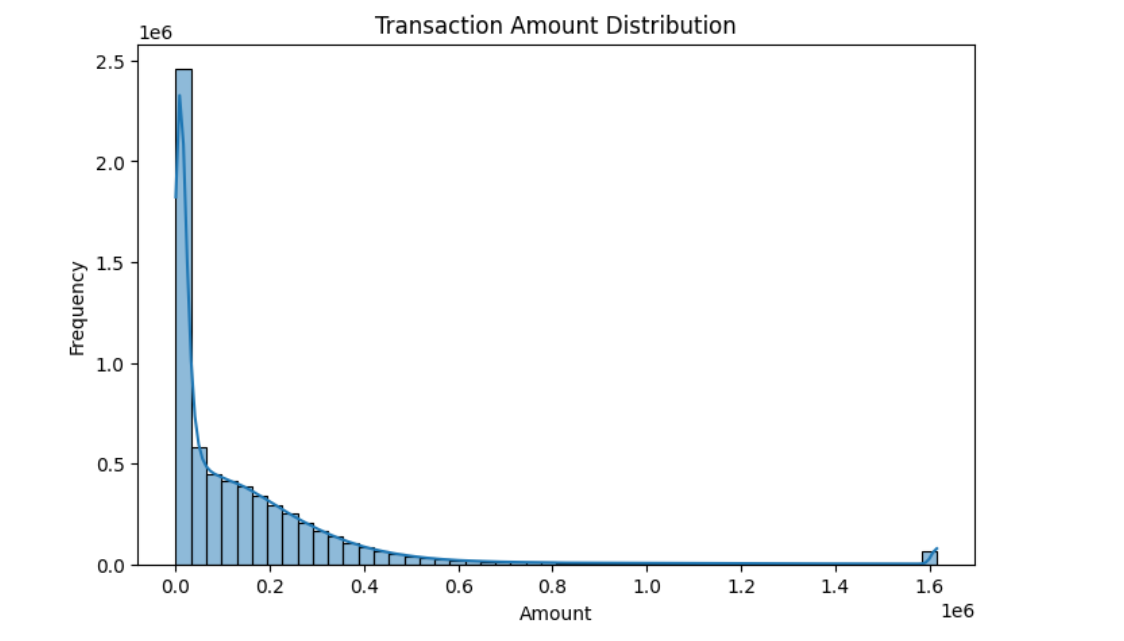
Most transactions are low-value, but fraudulent transactions tend to occur in higher amounts.
Sender Balance Distribution
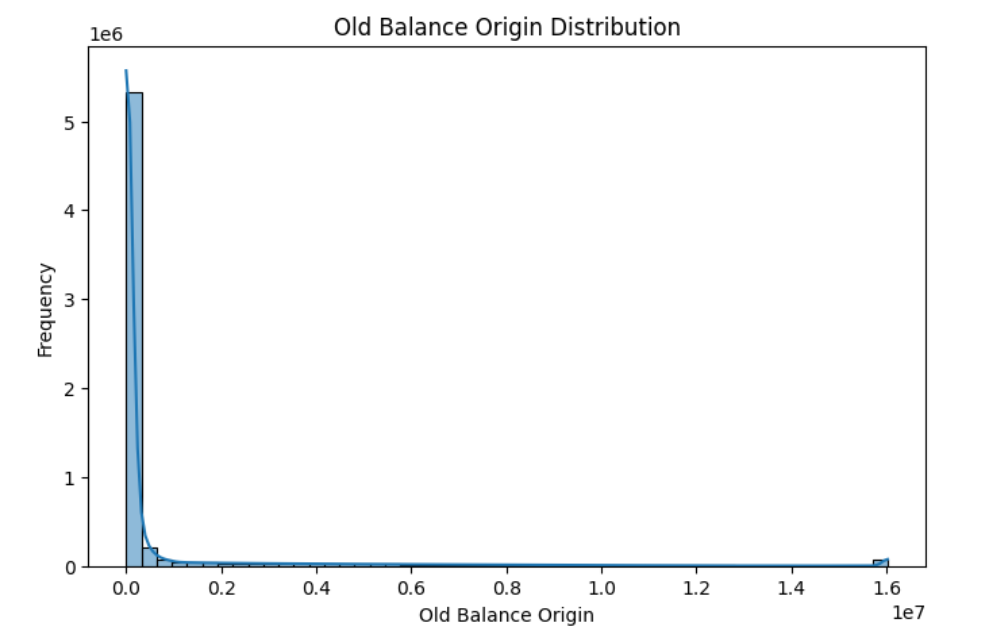
Fraud tends to occur more often in accounts with higher balances.
Feature Correlation
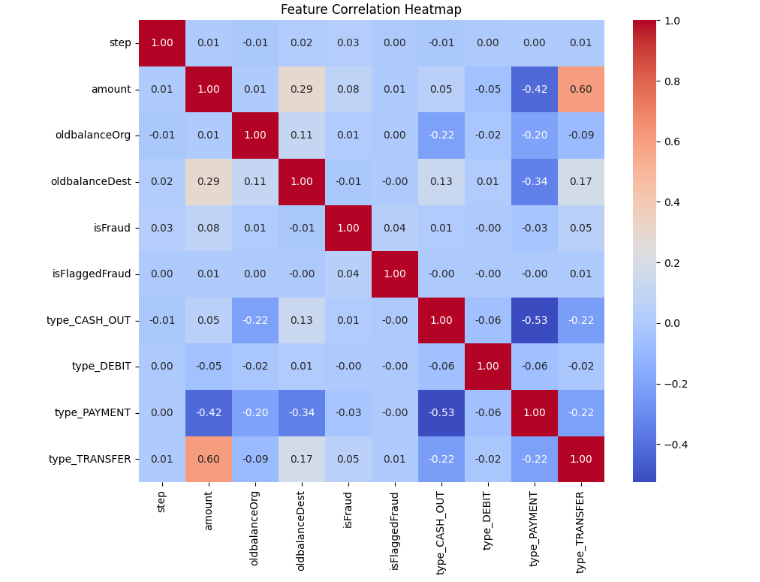
Highly correlated features (oldbalanceOrg vs newbalanceOrig, oldbalanceDest vs newbalanceDest) were handled to avoid multicollinearity.
🏗️ Model Building
We trained two models:
- Logistic Regression (baseline)
- Random Forest (final model)
Class imbalance was handled using class weights.
📈 Model Evaluation
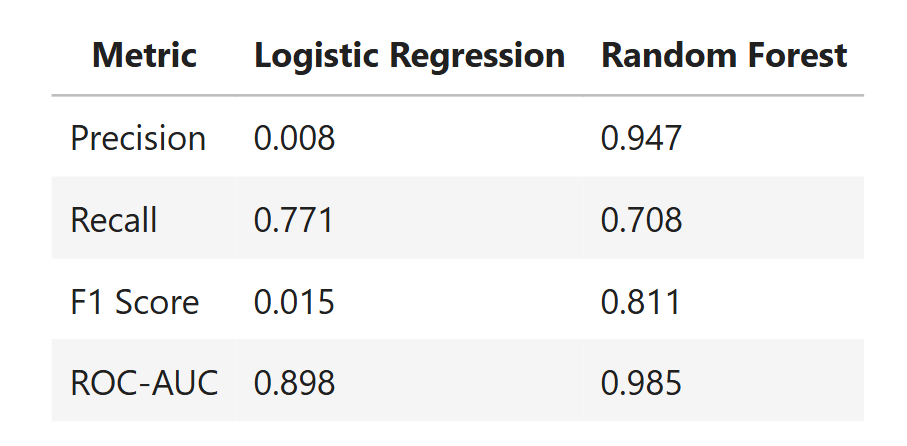
Logistic Regression Confusion Matrix
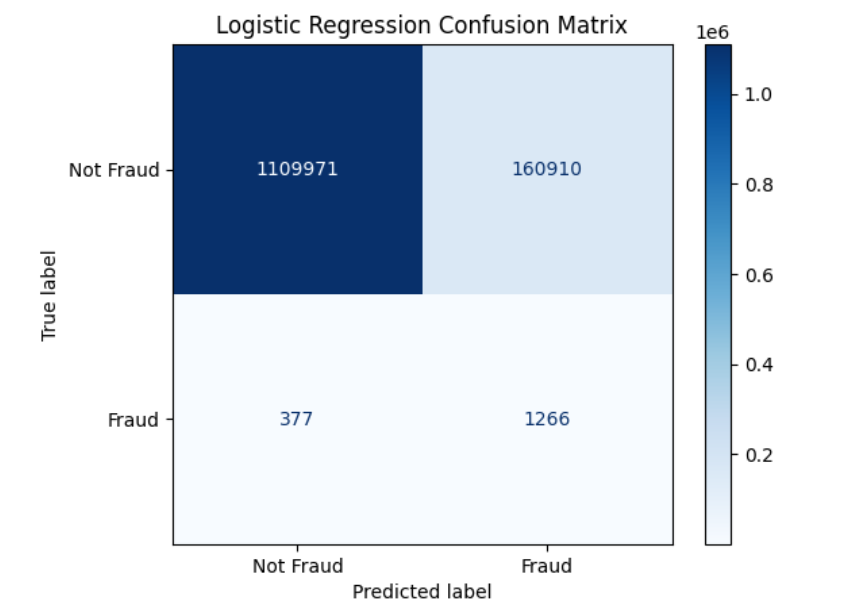
- Precision: 0.0078
- Recall: 0.7705
- F1-Score: 0.0155
- ROC-AUC: 0.8979
Random Forest Confusion Matrix
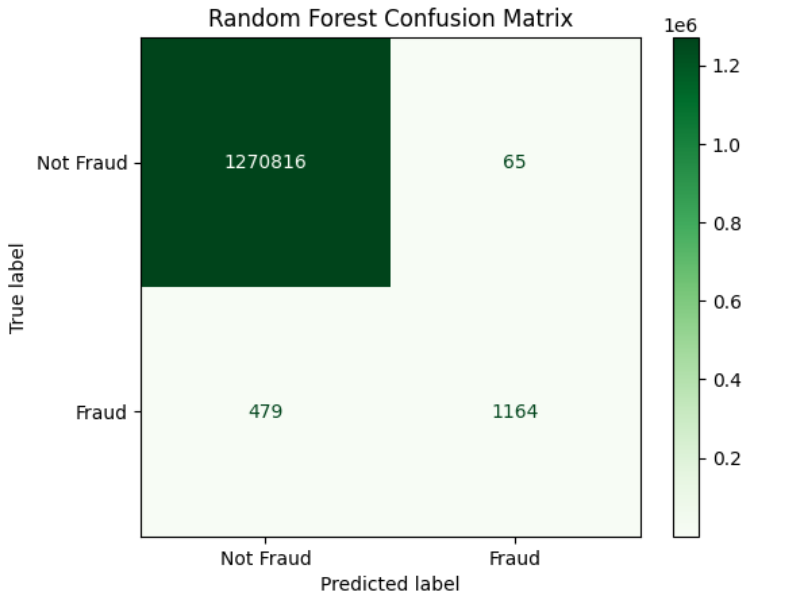
- Precision: 0.9471
- Recall: 0.7085
- F1-Score: 0.8106
- ROC-AUC: 0.9853
🔑 Feature Importance
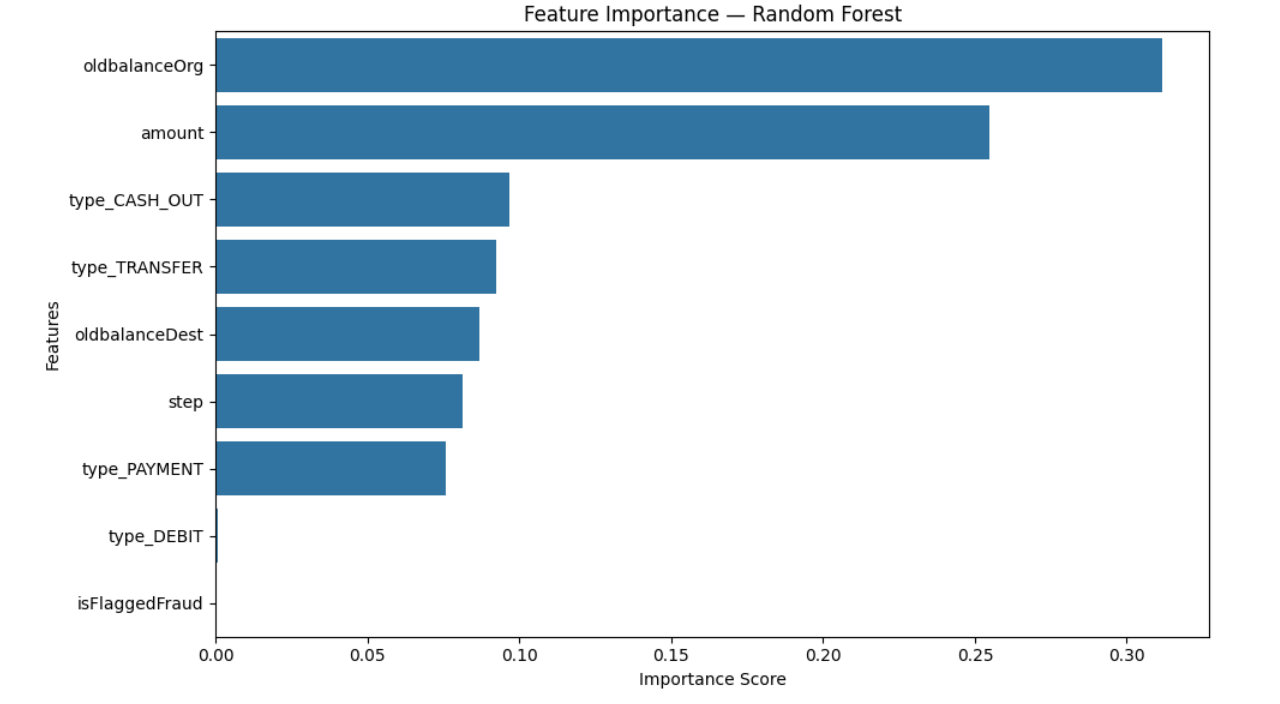
Top predictors of fraud:
oldbalanceOrgamounttype_CASH_OUTtype_TRANSFER
📊 Model Comparison
🛡️ Fraud Prevention Insights
Based on model analysis:
- Monitor high-value CASH_OUT and TRANSFER transactions.
- Flag accounts with large sender balances performing suspicious transfers.
- Implement real-time transaction monitoring.
- Set thresholds using model scores to minimize false negatives.
- Multi-layer fraud detection: combine rules + ML model predictions.
- Track unusual patterns in new accounts or inactive accounts.
- Continuously monitor model performance and drift post-deployment.
⚡ Key Takeaways
- Random Forest performed significantly better than Logistic Regression on imbalanced data.
- Model interpretability highlights account balance and transaction type as key predictors.
- Proper EDA and visualization are crucial for explaining fraud patterns to business stakeholders.
- This notebook demonstrates end-to-end ML workflow: from data cleaning → EDA → modeling → evaluation → business insights.
🛠️ Getting Started / Requirements
To run this project locally, you need Python installed (recommended >= 3.9) and the required libraries listed in requirements.txt.
1. Clone the repository
  git clone https://github.com/<your-username>/Fraud-Detection-ML.git
  cd Fraud-Detection-ML
2. Install required packages
pip install -r requirements.txt
3. Launch Jupyter Notebook
jupyter notebook Fraud_Detection_Transaction_Analysis.ipynb